
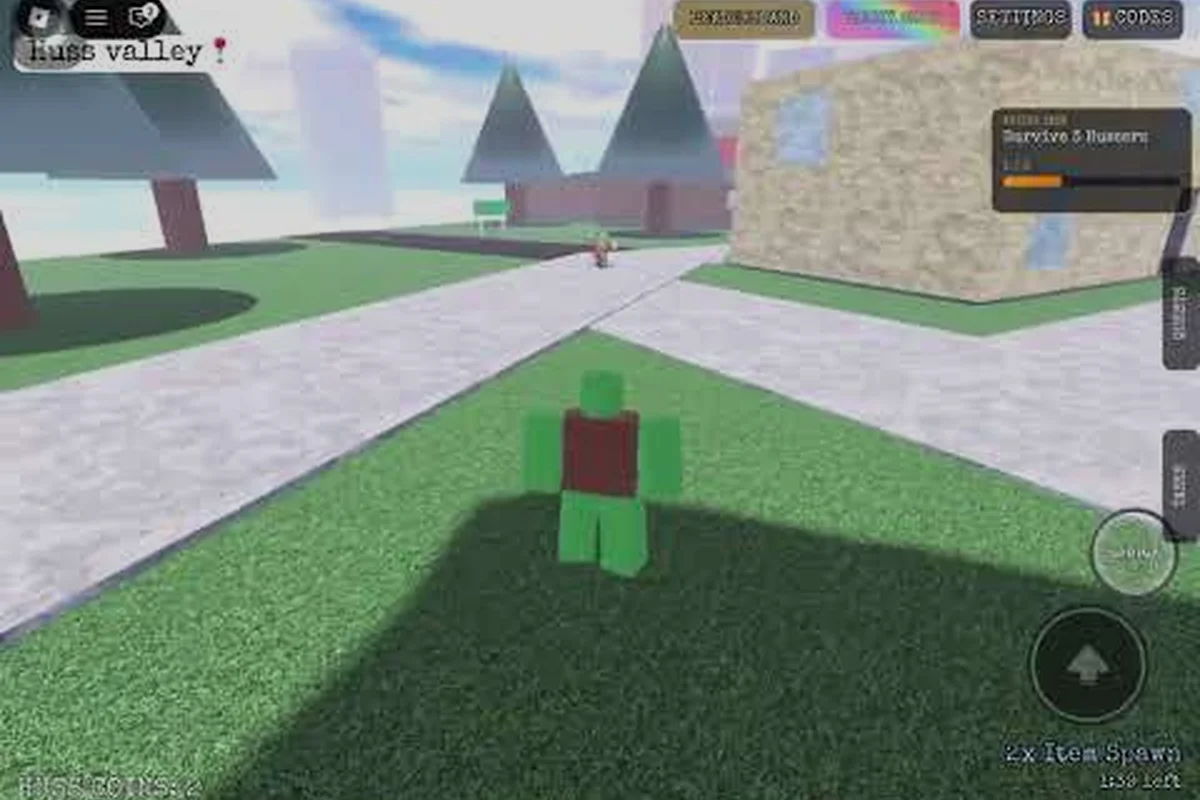
If you have spawned into Folk Valley and died within the first thirty seconds more times than you can count, this Escape Huss Valley survival guide is exactly what you need. The core loop sounds simple, survive until the round timer hits zero while monster NPCs hunt you through the streets, but the execution requires understanding spawn patterns, movement mechanics, and smart coin management. Since the game launched on July 18, 2026, it has already pulled in roughly 1.35 million visits with an 89% positive rating from over 10,900 votes, which tells you the community is hooked. This guide breaks down the escape tips that separate players who last one round from those who bank coins every single match.
Core Survival Loop and Round Timer Management
Every round in Escape Huss Valley drops you into Folk Valley with a visible countdown timer and a simple objective, stay alive until it hits zero. The moment you spawn, you should check three things immediately, your timer position, the nearest alleyway, and the direction the monster NPCs are patrolling. According to the official Roblox game page, new players who master the LeftShift sprint and LeftCTRL shift lock early gain a massive advantage because movement is the single most important survival tool in the game.
The survival timer is not just a countdown, it is a pacing mechanic that determines how aggressive the monster NPCs become. Community reports suggest that the first fifteen seconds of each round are relatively calm, giving you time to position yourself, but the final thirty seconds ramp up significantly with faster chases and tighter patrol routes. Players who ignore the timer and wander into open streets during the late phase almost always get caught, which is why tracking your remaining time is a core survival habit.
Reading Spawn Patterns and Patrol Routes
Monster NPCs in Escape Huss Valley follow predictable patrol routes during the early phase of each round, which means you can learn their paths through observation. Spend your first few rounds watching where the monsters walk instead of sprinting blindly, and you will notice that they favor main streets and open plazas while rarely entering narrow alleys. This knowledge lets you plan your route before the chase even starts, turning what feels like random chaos into a manageable pattern.
The patrol density increases as the timer decreases, and players report that the final ten seconds often spawn additional monsters in previously safe zones. Because of this, your escape route should always have a backup path, because the alley that was empty thirty seconds ago might now have a monster camping the exit. Building mental maps of at least three different escape routes per spawn point is one of the most reliable escape tips you can develop.
Sprint Stamina and Shift Lock Mechanics
Your sprint stamina is a finite resource that regenerates slowly, so spamming the LeftShift sprint button will leave you exhausted exactly when you need speed the most. The key is to sprint in short bursts, using the stamina bar to create distance during chases, then walking or shift-locking through safe zones to recover. Shift lock (LeftCTRL) gives you tighter camera control and lets you navigate corners without bumping into walls, which is critical when monster NPCs are closing in.
Players who master the rhythm of sprint, recover, sprint again can loop monsters indefinitely, while those who hold sprint continuously die within the first minute. The movement system rewards deliberate pacing over panic, and this is where most beginners fail. If you want to refine your movement further, the Escape Huss Valley parkour guide covers advanced sprint techniques and shift lock strategies in much greater detail.
Early-Run Errors That Force a Restart
Most new players die not because the game is unfair, but because they repeat the same predictable mistakes every round. The most common error is wasting coins on low-value purchases during the early game, which leaves you without the resources needed for better escape tools later. According to community data, players who save their first few thousand coins for the higher-tier items in the Huss Shop survive significantly longer than those who buy the cheapest gear immediately.
Another frequent mistake is ignoring the survival timer entirely and treating the game like a free-roam experience. The timer is not decorative, it directly influences monster aggression, so players who do not track it get caught off guard when the difficulty spikes. Beginners also tend to run in straight lines when chased, which makes them easy targets, instead of using corners and obstacles to break line of sight.
Coin Management and Huss Shop Priorities
The Huss Shop is your progression hub, and how you spend coins determines how quickly you improve. Community testing suggests that the best early purchases are items that extend your survivability, such as stamina boosts or speed enhancements, rather than cosmetic items that offer no mechanical advantage. The table below shows the recommended purchase order based on community feedback and observed performance data:
| Purchase Priority | Item Type | Why It Matters | Estimated Cost Range |
|---|---|---|---|
| First | Stamina Upgrade | Extends sprint duration during chases | 1,500-2,500 coins |
| Second | Speed Boost | Increases base movement speed | 2,000-3,000 coins |
| Third | Radar/Detector | Shows monster patrol routes | 3,500-4,500 coins |
| Fourth | Cosmetic Items | No mechanical benefit, buy last | Varies widely |
Players who follow this priority order report surviving an average of two to three additional rounds per session compared to those who buy randomly. The radar detector is particularly valuable because it removes the guesswork from patrol route tracking, letting you plan escapes with real-time data instead of memory. Saving for this item early is one of the smartest escape tips in the entire game.
Positioning Errors and Open Street Exposure
Running through open streets is the fastest way to get caught, yet beginners do it constantly because it feels like the most direct route. Monster NPCs have clear sightlines across plazas and main roads, and their movement speed in open areas is higher than yours, so you cannot outrun them in a straight line. The solution is to stick to alleyways and building edges, where obstacles break line of sight and give you time to change direction.
Another positioning error is camping in the same spot for too long, because patrol routes eventually sweep through every area of the map. Players who stay mobile, even when no monster is visible, survive longer than those who hide in one corner and hope for the best. The game rewards constant, deliberate movement over passive hiding, and understanding this shifts your entire approach to each round.
How to Escape Chases and Break Line of Sight
When a monster NPC locks onto you, the chase begins, and how you handle those first few seconds determines whether you escape or get caught. The most effective strategy is to break line of sight immediately by turning a corner or entering a building, then changing direction while the monster is still moving toward your last known position. This simple technique works because the monster AI commits to a path once it loses visual contact, giving you a precious few seconds to slip away.
Community reports indicate that monsters lose track of players after roughly three seconds without visual contact, which is enough time to duck into an alley and double back. The mistake most beginners make is continuing to run in the same direction after breaking line of sight, which puts them right back in the monster's path. Instead, wait a beat, listen for the chase music to fade, then move perpendicular to the monster's last known direction.
Reading the Map While Monsters Close In
Knowing the map layout is essential for successful escapes, because you cannot plan a route through streets you have never explored. Spend your first few rounds deliberately wandering the map during the safe early phase, memorizing alley connections, dead ends, and building entrances. The table below compares the three main escape route types based on community testing:
| Route Type | Risk Level | Speed | Best Used When |
|---|---|---|---|
| Alley Network | Low | Medium | Multiple monsters active |
| Rooftop Paths | Medium | High | Single monster chasing |
| Main Street Dash | High | Very High | Final seconds, no other option |
The alley network is the safest option because it offers constant cover and multiple exit points, but it requires map knowledge to navigate quickly. Rooftop paths are faster but riskier, because a wrong jump can drop you directly into a monster's patrol route. The main street dash is a last-resort gamble that only works when the timer is nearly zero and you can see the exit.
Using Obstacles to Your Advantage
Obstacles are not just decoration, they are your primary survival tools during chases. Walls, crates, and building corners all break line of sight, and experienced players use them to create distance without burning stamina. The trick is to circle obstacles rather than running away in a straight line, because the monster AI will path around the obstacle while you maintain your position.
This technique, sometimes called obstacle looping, is one of the most effective escape tips in the game. When a monster is close behind you, sprint to a corner, turn sharply, and the monster will overshoot slightly, giving you a moment to slip past it. Practicing this in the early safe phase of each round builds the muscle memory you need when the pressure is on.
Advanced Survival Strategies for Late Game Rounds
Once you have the basics down, the next step is learning how to survive the late-game rounds where monster density increases and patrol routes tighten. The final thirty seconds of each round are the most dangerous, and players who survive them consistently use a different strategy than the early phase. Instead of moving constantly, they find a defensible position with multiple escape routes and wait for the right moment to make their final dash.
Community data suggests that the last ten seconds are when most players die, because panic sets in and they sprint toward the exit without checking for monsters. The better approach is to stay calm, watch the patrol patterns, and time your final movement to slip through a gap in the monster coverage. This requires patience and nerves, but it dramatically increases your survival rate.
Defensive Positioning and Safe Zones
Some areas of Folk Valley are naturally safer than others, and learning these safe zones gives you a significant advantage. Narrow alleys with only one entrance are defensible because you only need to watch one direction, while open plazas are death traps during the late game. The table below ranks the best defensive positions based on community testing:
| Position Type | Defensibility | Escape Options | Late Game Viability |
|---|---|---|---|
| Dead-End Alley | High | Low | Good with one exit |
| Building Interior | Medium | Medium | Good, requires map knowledge |
| Rooftop Corner | High | Medium | Excellent, hard to reach |
| Open Plaza | Low | High | Poor, avoid late game |
The rooftop corner is the strongest late-game position because monsters rarely path onto rooftops, and you can see approaching threats from a distance. However, reaching the rooftop requires parkour skills, and a failed jump can be fatal. The dead-end alley is a solid backup because it only has one entrance to watch, but you need an exit plan if a monster finds you.
Handling Multiple Monster Encounters
Late-game rounds often spawn multiple monsters simultaneously, and handling two or three chasers requires a completely different approach than a single chase. The key is to keep the monsters grouped so they block each other's paths, rather than letting them approach from different angles. Running in a tight circle around a large obstacle often causes multiple monsters to collide and slow each other down.
Players who master multi-monster chases report that the obstacle loop technique becomes even more effective, because the monsters interfere with each other's pathing. When you have multiple chasers, never run into a dead-end alley, because you will have nowhere to go when they corner you. Instead, keep moving through connected routes that give you multiple escape options at every turn.
Recommended Progression Path and Daily Routine
Building a consistent progression routine is the fastest way to improve at Escape Huss Valley, because the game rewards regular practice and smart resource management. Start each session by checking the Huss Shop for new items and redeeming any active codes, since the developer regularly releases free coin rewards through the Roblox game page. According to the community, codes like UPDATE6 and ASCENSIONS have been active recently, and redeeming them gives you a head start on your coin savings.
Your daily routine should include a few warm-up rounds focused on movement practice, followed by serious survival attempts once you have your rhythm. The Escape Huss Valley beginner tips article covers additional progression strategies and daily practice routines that complement this survival guide. Players who dedicate even twenty minutes a day to deliberate practice improve noticeably within a week.
Building a Practice Routine
Deliberate practice means focusing on one specific skill per session rather than just playing randomly. One day, focus entirely on obstacle looping during chases, the next day, work on map memorization by exploring new routes during the safe phase. This targeted approach builds skills much faster than playing the same way every round.
The table below shows a sample weekly practice schedule based on community recommendations:
| Day | Focus Area | Practice Method |
|---|---|---|
| Monday | Sprint Stamina | Sprint bursts, no holding |
| Tuesday | Map Routes | Explore one new area per round |
| Wednesday | Obstacle Looping | Circle obstacles during chases |
| Thursday | Patrol Patterns | Watch monster routes, no running |
| Friday | Late Game Survival | Focus on final 30 seconds |
| Weekend | Full Sessions | Apply all skills in real matches |
Tracking Your Progress
Keep a simple mental or written log of how many rounds you survive and what killed you each time, because this reveals your weak points. Players who track their deaths notice patterns, such as always dying in the same area or always getting caught during the final ten seconds. Fixing these specific weaknesses is much more effective than trying to improve everything at once.
The survival time metric is the best progress indicator, because it directly measures your improvement at the core objective. If you consistently survive longer each session, your escape tips are working, even if you still die before the timer ends. Patience and consistent practice are the real keys to mastering this game.
Frequently Asked Questions
What is the most important survival skill in Escape Huss Valley?
The most important skill is sprint stamina management, because it directly controls your ability to escape chases and create distance from monster NPCs. Sprinting in short bursts and recovering during safe moments lets you maintain speed when it matters most, while players who exhaust their stamina early become easy targets.
How do I get more coins in Escape Huss Valley?
You earn coins by surviving rounds, with longer survival times granting larger payouts. Redeeming active codes from the official Roblox game page also provides free coins, and the Huss Shop offers items that increase your survival rate, which indirectly boosts your coin earnings over time.
What are the worst beginner mistakes in Escape Huss Valley?
The worst mistakes are wasting coins on low-value purchases, ignoring the survival timer, and running in straight lines during chases. These three errors account for most early deaths, and fixing them immediately improves your survival rate. Focus on stamina upgrades first and always break line of sight when chased.
Can I play Escape Huss Valley solo?
Yes, the game supports solo play with up to 25 players per server, and you can survive rounds independently. Solo play is actually a great way to practice movement and map knowledge without the distraction of other players, though watching experienced players in multiplayer servers can also teach you valuable escape tips.
How long does a typical round last?
A typical round lasts three to five minutes, depending on server settings and the survival timer configuration. The final thirty seconds are the most intense, with increased monster density and tighter patrol routes, so staying calm and using your practiced escape routes during this phase is critical for survival.